


Electricity sharing: using your own generation across multiple sites
Solar PV can serve more than the building where it is installed.
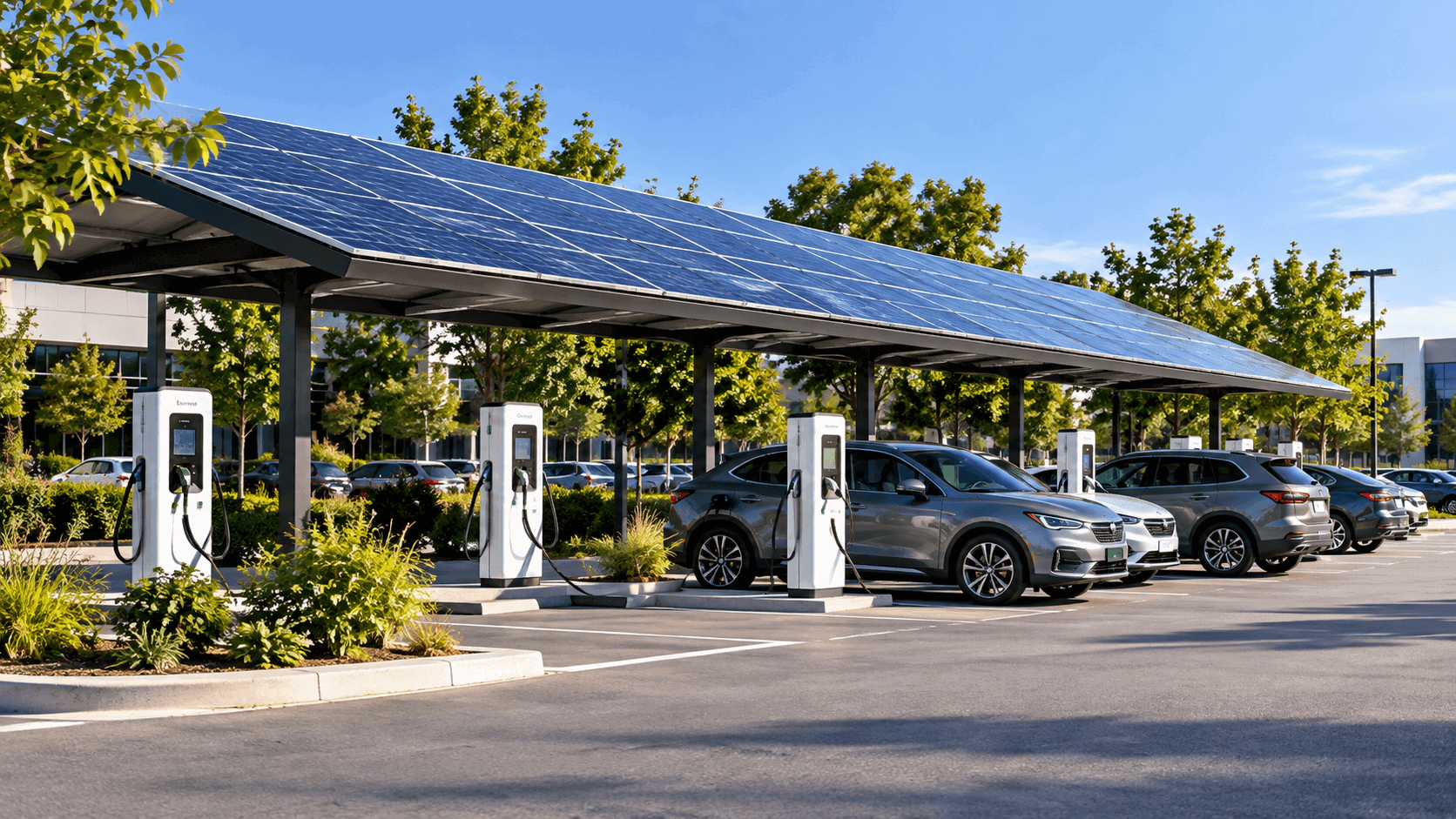
Read moreSolar panels generate electricity during the day, when company cars, employees’ vehicles and visitors’ cars may be parked on site. Linking generation with charging can help you use more electricity on the premises. What matters most is when vehicles charge and how their demand is managed.
Start with the vehicles’ daily routines. Cars parked outside the building for several hours during the working day can charge while the panels are generating. Vehicles that spend the day on the road and return in the evening have a different demand profile.
Annual solar generation alone cannot tell you how much charging it will cover. Look at when generation, building demand and vehicle availability coincide. Seasonal differences matter too, as the opportunity to charge from solar varies throughout the year.
Solar electricity can power production equipment, heating, cooling and vehicles at the same time. Charging controls need an up-to-date picture of energy use across the site.
The system can adjust charging rates to the power available and share capacity between vehicles. When building demand rises, it reduces charging power. When capacity becomes available, it can increase it again. This dynamic control helps limit peaks and makes use of existing electrical infrastructure.
Priorities matter too. A vehicle due to leave shortly may need a different charging schedule from one parked until the end of the working day. The design should match the site’s electrical capacity to the practical needs of its users.
Consider how much energy each vehicle needs and how long it will be parked. A staff car park has different requirements from a vehicle making a brief stop between journeys.
Decide who can use the chargers, how access will work and how charging sessions will be recorded. A company may distinguish between fleet vehicles, employees’ own cars and visitors. It is also worth agreeing who will operate and maintain the chargers at the design stage.
A battery can store some daytime generation for later charging. An EV can also use solar electricity directly, without a battery on site, when charging coincides with generation.
Base the storage decision on the benefits it will deliver. Allow for capital cost, how much of the capacity you will use, and losses when storing and drawing energy. Check that the meters, inverters, battery and charging controls are compatible.
It makes sense to design solar PV and charging as parts of one energy system. At BK, we integrate solar PV, batteries, charging stations and electrical installations. Our energy management system (EMS) coordinates generation, consumption and storage and lets you see how energy flows through the site.
Allow for growth in vehicle numbers too. Planning for expansion now can help you add chargers later without unnecessary changes to infrastructure already in place.
Planning workplace charging or looking to use more of your own solar power? Get in touch. We’ll design a system around the needs of your building and your vehicles.


Solar PV can serve more than the building where it is installed.
Read moreFarming and solar power can share the same land.
Read moreA suitable roof and enough sunlight are only part of planning a solar project.
Read more
